
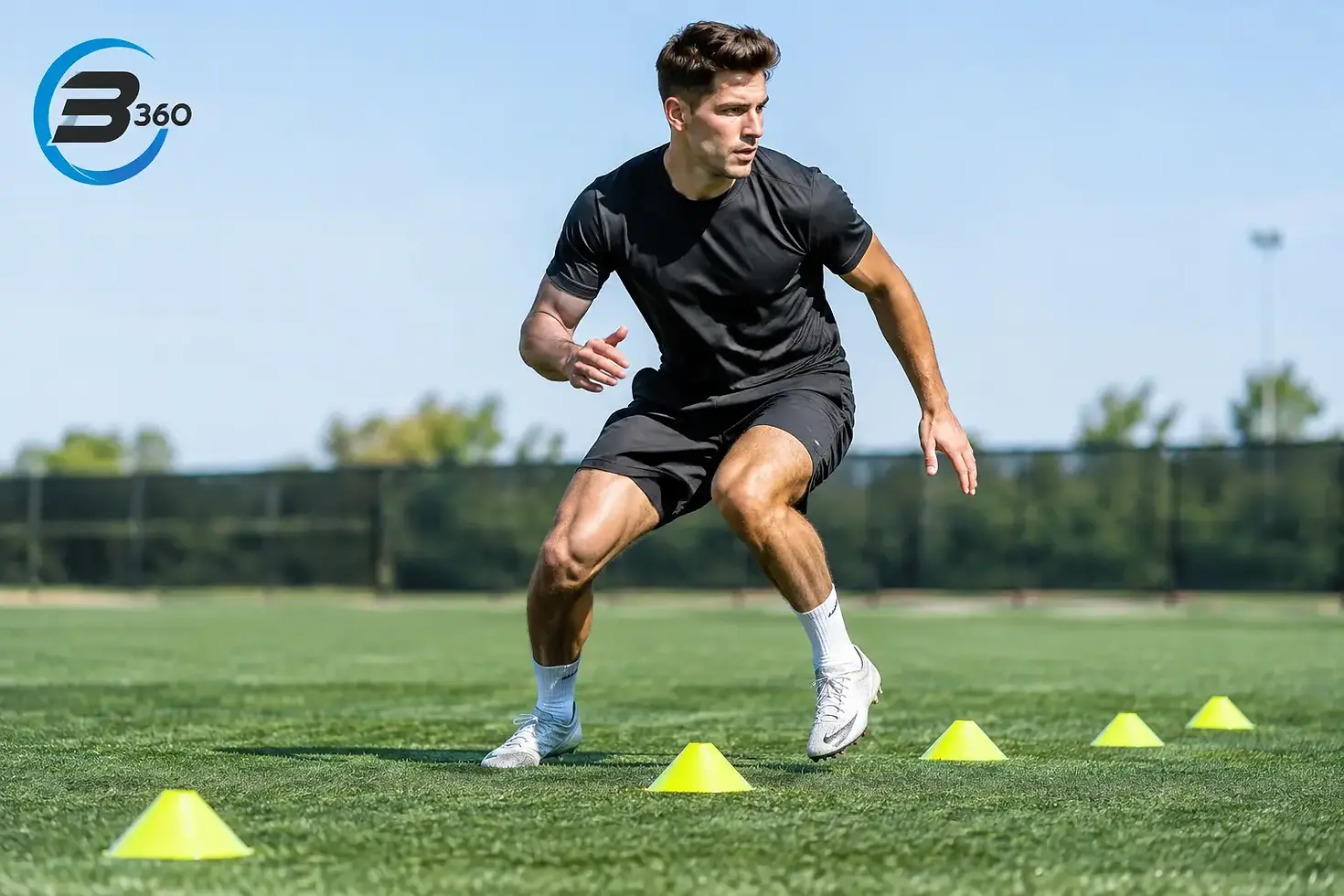
Football Agility Training Guide for Faster Cuts
A defensive back does not lose a rep because they cannot run fast in a straight line. They lose it when a receiver plants, changes pace, and breaks in the opposite direction. The same is true for running backs finding daylight, linebackers scraping across the field, and quarterbacks escaping pressure. This football agility training guide focuses on the movements that help players stay balanced, react quickly, and make confident decisions when the play gets unpredictable.
Agility is more than running drills around cones. It is the ability to recognize a cue, shift your body position, brake safely, and accelerate again. For young athletes, building those skills early creates better movement habits. For teen competitors and adult players, it can make every route, tackle angle, and change of direction more efficient.
What Football Agility Really Means
Speed matters in football, but game speed is rarely a 40-yard dash. Most plays ask athletes to start, stop, shuffle, turn, backpedal, sprint, and react within a few seconds. Good agility connects each of those actions without wasted steps or loss of balance.
A player with strong agility can lower their center of gravity before a cut, keep their feet under their hips, and push forcefully into the next direction. They do not need to take three extra steps to recover after stopping. They also keep their eyes up, which matters because football is a read-and-react sport, not a cone-running contest.
Position changes the emphasis. A wide receiver may need sharp route breaks and body control near the sideline. A linebacker needs lateral range and quick forward acceleration. Linemen work in smaller spaces but still need fast feet, powerful redirects, and control after contact. The right training plan develops shared athletic qualities, then adds position-specific patterns.
Start With Movement Quality
Before adding faster drills, make sure the athlete can own basic positions. A fast drill performed with collapsing knees, high hips, or poor deceleration only reinforces bad habits. Younger athletes especially benefit from learning how to move well before chasing stopwatch times.
Begin each session with five to 10 minutes of active preparation. Use easy jogging, skips, lateral shuffles, backpedals, and controlled accelerations. Then add mobility for the ankles, hips, and upper body. Stiff ankles can limit a player’s ability to sink into a cut, while limited hip control often causes the knee to drift inward.
Teach three simple cues: stay athletic, push the ground away, and stop under control. An athletic stance means knees and hips are slightly bent, chest is tall, and weight is balanced through the midfoot. Players should avoid standing too upright, reaching too far with the lead foot, or crossing their feet during a lateral shuffle unless the drill calls for it.
Train Deceleration Before Direction Change
The most overlooked part of agility training is braking. Every explosive cut begins with a controlled stop. If a player cannot absorb force safely, they will be slow out of the break and more likely to lose balance.
Start with a short sprint of five to 10 yards, then ask the athlete to stop within two or three steps. Focus on lowering the hips as they approach the stopping point, taking smaller steps to slow down, and keeping the knees aligned over the toes. Once that looks clean, add a turn and re-acceleration.
A useful progression is sprint, stick, and go. The athlete sprints forward, lands in a balanced athletic position for one second, then drives out at an angle. That one-second pause exposes whether they truly control the stop. Remove the pause only when their posture stays strong.
Do not treat every drill like a maximum-effort test. At first, moving at 60 to 75 percent speed gives athletes time to understand the position. Speed comes after control. This is particularly valuable for youth players who are still learning body awareness.
Build Better Cuts With Simple Drills
Cone drills can help, but the layout should match a movement goal. A large, complicated pattern may look impressive, yet it can hide weak technique. Use short distances and clear intent.
For lateral movement, set two cones five yards apart. Have the athlete shuffle between them without clicking the heels together or crossing over. Keep the hips low and the shoulders level. This drill builds the base for coverage, pursuit, and blocking movement.
For a 45-degree cut, place one cone five yards ahead and a second cone at an angle. Sprint to the first cone, plant outside the body, and drive toward the second. The plant should be quick but not wildly stretched. A foot that lands too far ahead acts like a brake rather than a launch point.
For sharper change of direction, use a five-yard sprint into a 90-degree turn. Encourage the athlete to decelerate just before the turn, turn the hips toward the new path, and accelerate with purpose. Start with both sides. Football does not let players choose their favorite direction.
Backpedal-to-break drills are especially useful for defensive backs and linebackers. Backpedal five yards, plant, open the hips, and drive forward or diagonally on a coach’s signal. The goal is not a perfect backpedal in isolation. It is a clean transition from retreating to attacking the ball or ball carrier.
Add Reaction So It Transfers to the Field
Planned drills teach mechanics. Reactive drills teach football. Once players can cut with control, add visual, verbal, or movement cues that force a decision.
A coach can point left or right at the last moment, call a color, toss a ball, or move into space for the athlete to mirror. A partner can also serve as a live cue. One player shuffles or backpedals while the other changes direction, requiring the defender to stay square and react.
Keep the reactive work short and competitive. Reps of three to six seconds are often enough, followed by full recovery. Quality drops when athletes are exhausted, and sloppy cuts do not build better agility. Conditioning has a place, but it should not turn every skill session into a fatigue test.
For teams, small-area competition is one of the best options. Mirror drills, tag games, and one-on-one route-release work create real decision-making without needing a full field. Players stay engaged because they can feel the difference between a clean break and a late reaction immediately.
A Weekly Football Agility Training Plan
Two focused agility sessions per week works well for most players during the offseason or preseason. Leave at least 48 hours between hard change-of-direction sessions when possible. During the season, one shorter session can maintain the skill without adding unnecessary fatigue.
A 35- to 45-minute session can include preparation, deceleration practice, one or two planned cutting drills, reactive work, and a few short accelerations. Keep the total number of high-quality reps manageable. An athlete does not need hundreds of cuts to improve. They need repeated cuts with good posture, intent, and recovery.
Strength training supports this work. Squats, split squats, hinges, calf raises, and single-leg balance exercises build the lower-body capacity needed to stop and redirect. Core training also matters, not because it creates instant quickness, but because it helps athletes transfer force while staying stable through contact and turns.
Recovery is part of the plan. Sleep, hydration, and days away from intense cutting help players show up ready to move well. If an athlete has ongoing knee, ankle, or hip pain, reduce intensity and seek guidance from a qualified health professional before pushing through drills.
Create a Space for Consistent Reps
Weather, crowded fields, and limited practice time can make consistent training difficult. Indoor turf gives players a reliable place to work on footwork, routes, defensive movement, and small-group competition throughout the year. At B360, athletes and teams can use dedicated training turf to turn focused reps into more confident football movement.
The best agility sessions do not need flashy equipment or endless drills. They need a safe surface, enough room to accelerate and stop, and a clear plan built around the player’s position and experience level.
Bring intent to every rep: lower before the cut, see the cue, and explode into the next play. Those small details are where faster, more confident football starts.


Comments